
Lalvin
Lalvin 71B 5g - Fruity Wine & Mead Yeast
Price:
€3,49
Title
Black Friday rush: we ship as fast as we can, but delivery may take 1–2 days longer than usual.
Pairs well with
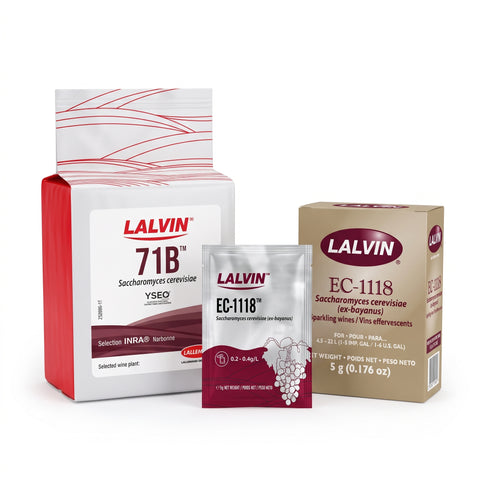
Lalvin 71B is the fruity counterpart to EC-1118: it partially metabolises malic acid, softening sharp young wines and fruit musts while throwing generous fruity esters. The strain for drink-it-young country wine, melomel and rosé-style fruit batches.
Where EC-1118 is the neutral workhorse, 71B makes the fruit taste MORE like itself — pick by what the batch needs. Moderate alcohol tolerance (~14%) and a gentle, aromatic ferment.
Key features
- Fruit-forward esters — flatters young wines and melomels
- Softens acid: partially consumes malic acid
- The strain for fruit wine, rosé styles and fruity mead
- ~14% alcohol tolerance
- 5 g sachet treats up to ~25 L
Usage
- Rehydrate in 50 ml of water at 35–37 °C for 20 minutes (no more than 45 minutes in all), then pitch into the must
- Pair with yeast nutrient in mead and fruit batches
- Drink 71B batches young — that's where it shines
Quick facts
- Strain: S. cerevisiae
- Character: fruity, acid-softening
- Tolerance: ~14% ABV
- Pack: 5 g / ~25 L
Related products
Frequently asked questions
What does 71B do, and what is it for?
Lallemand notes high ester production with tropical fruit and banana aromas, which lifts wines from neutral varieties, and it metabolises 20–40% of the malic acid during primary fermentation, softening the acidity. Lallemand recommends it for young, fresh, fruity red, rosé and white wines, late-harvest wines and fruit ciders. For mead, Lallemand says 71B can technically ferment it but suggests strains such as EC-1118 instead.
How much do I need for my batch?
Lallemand’s data sheet says one 5 g sachet treats 4.5 to 23 L.
Do I need to rehydrate it?
Yes: Lallemand says to rehydrate it in 50 ml of water at 35–37 °C, stir gently and wait 20 minutes, keeping the whole step under 45 minutes. Don’t rehydrate it in the must, and keep the difference between yeast and must within 10 °C, slowly adding some must to acclimatise it if needed.
What temperature and alcohol level can it handle?
Lallemand gives a fermentation range of 15–30 °C and an alcohol tolerance of up to 14%, depending on conditions. It has a short lag phase, a moderately vigorous fermentation and low nitrogen needs.
Share