
Lalvin
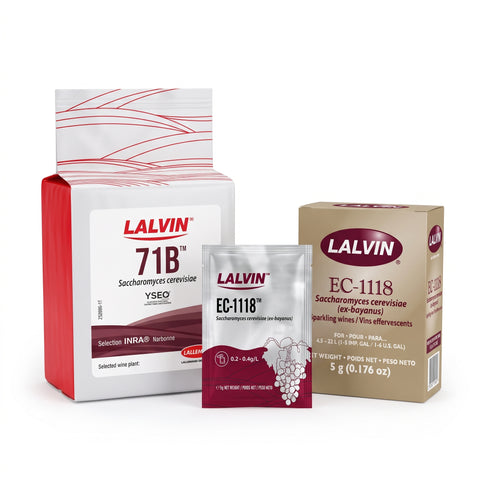
Lalvin EC-1118 Prise de Mousse 5g - Wine, Cider & Mead Yeast
Price:
€2,99
Title
Black Friday rush: we ship as fast as we can, but delivery may take 1–2 days longer than usual.
Pairs well with
The most-pitched wine yeast on earth: Lalvin EC-1118 ferments everything — white and red wine, cider, mead, fruit wine, even restarting a stuck batch. Champagne heritage (Prise de Mousse), up to 18% alcohol tolerance, clean and reliable in conditions that kill lesser strains.
If one sachet belongs next to every demijohn we sell, it's this one. Ferments cool or warm (10–30°C), settles into a compact lees, and simply does not quit.
Key features
- The universal strain: wine, cider, mead, fruit wine
- Alcohol tolerance up to 18% — restarts stuck ferments
- Champagne (Prise de Mousse) heritage, clean profile
- Wide temperature range 10–30°C
- 5 g sachet treats up to ~25 L
Usage
- Rehydrate in 50 ml of water at 35–37 °C for 20 minutes (no more than 45 minutes in all), then pitch
- Cider and mead: add yeast nutrient — juice and honey are nutrient-poor
- Dry finisher: expect it to eat every sugar it can find
Quick facts
- Strain: Saccharomyces bayanus
- Tolerance: ~18% ABV
- Range: 10–30°C
- Pack: 5 g / ~25 L
Related products
Frequently asked questions
How much do I need for my batch?
Lallemand’s data sheet says one 5 g sachet treats 4.5 to 23 L.
Do I need to rehydrate it?
Yes: Lallemand says to rehydrate it in 50 ml of water at 35–37 °C, stir gently and wait 20 minutes, keeping the whole step under 45 minutes. Don’t rehydrate it in the must, and keep the difference between yeast and must within 10 °C, slowly adding some must to acclimatise it if needed.
What temperature and alcohol level can it handle?
Lallemand gives a fermentation range of 10–30 °C and an alcohol tolerance of up to 18%, depending on conditions. It starts quickly and ferments vigorously, with a neutral aroma, little foam and a killer factor.
What can I use it for?
Lallemand selected it for sparkling base wine and in-bottle secondary fermentation, and uses it for white and red wines, fruit ciders and restarting stuck fermentations. For mead, Lallemand names EC-1118 among the strains it suggests.
Share