
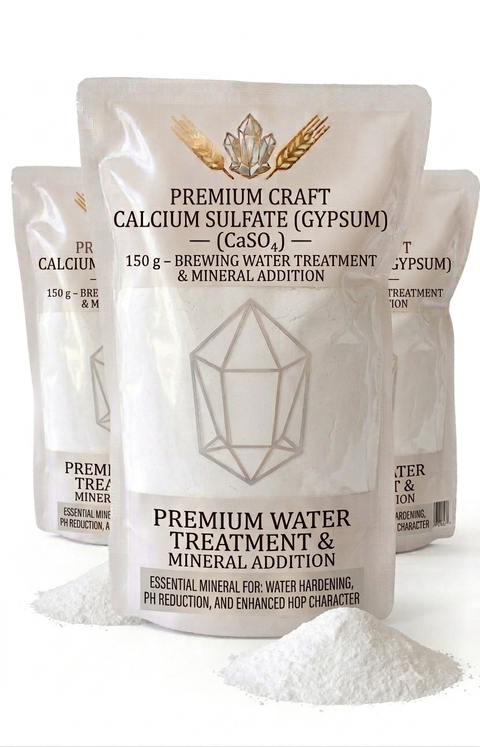
Gips (calciumsulfaat, CaSO₄) - brouwzout voor een strakke bitterheid, droge afdronk en calcium in de maisch, 100–500 g
The IPA salt. Gypsum adds calcium for the mash and sulfate for the finish: sulfate sharpens and lengthens hop bitterness and dries the beer out, which is why a West Coast IPA, a pale ale, a bitter or a Pilsner tastes crisper with it than without. It is the water of Burton-on-Trent in a bag. Typical additions for a hoppy beer in soft Dutch water run 4–10 g per 20 L; a balanced beer gets a few grams alongside calcium chloride.
Water treatment works by grams per batch, not by guesswork: decide your target with a calculator (Bru'n Water, Brewfather, the Grainfather app), weigh the salt on a 0.01 g scale, and add it to the strike water or the mash. Change one thing at a time and taste the difference — it is the cheapest flavour lever in all-grain brewing.
Gypsum dissolves slowly in cold water — add it to the mash or to hot strike water and stir. Very high sulfate (over 300 ppm) turns bitterness harsh and minerally; build up in steps. Food-grade, not builder's gypsum.
Key features
- Food-grade calcium sulfate (gypsum)
- Adds calcium (mash pH, yeast) and sulfate (crisp, dry hop bitterness)
- For IPAs, pale ales, bitters, Pilsners
- Lowers mash pH slightly
- 100 g, 250 g or 500 g
Usage
- Calculate the dose; typical 4–10 g per 20 L for hop-forward beers
- Weigh on a 0.01 g scale, add to the mash or hot strike water and stir well
- Check mash pH after 10 minutes — target 5.2–5.6
- Store closed and dry
Quick facts
- Contents: calcium sulfate dihydrate, food grade
- 1 g in 20 L adds: ≈ 12 ppm Ca, ≈ 28 ppm SO₄
- Packs: 100 / 250 / 500 g
Related products
- Calcium Chloride (CaCl₂) — the malt-side partner salt
- Magnesium Sulfate — more sulfate, plus magnesium
- Digital pH Meter — check the mash
- Weyermann Pale Ale Malt — the base malt it is usually paired with
From the blog
- Brewing Water Chemistry Made Simple — sulfate, chloride and the ratio between them