
Brewtools Stainless Steel Brewing Paddle 78 cm - SS304 Mash Paddle with T-Handle & Kettle Hook
Sold out
Ask us on WhatsAppBlack Friday rush: we ship as fast as we can, but delivery may take 1–2 days longer than usual.
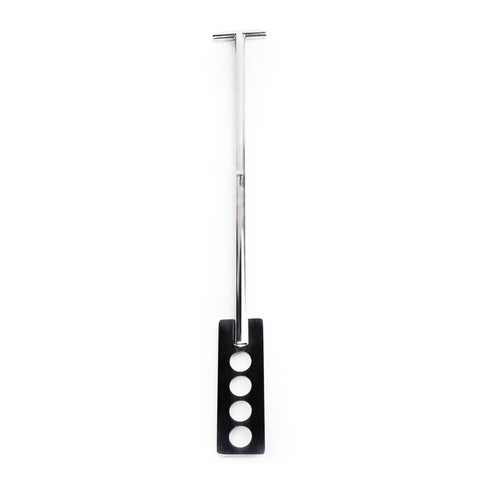
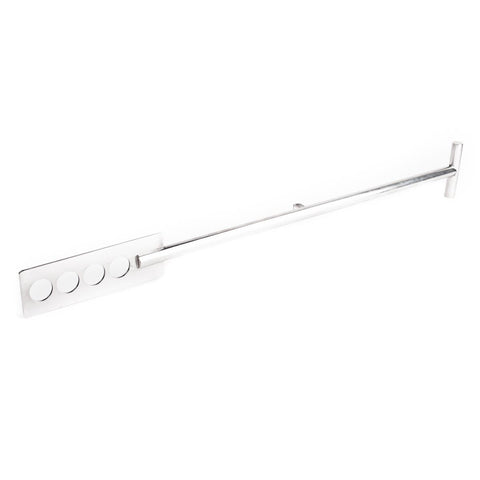
The paddle that hangs on the kettle instead of dripping on the floor. Brewtools' 78 cm mash paddle is SS304 stainless with a T-handle for a proper two-hand grip and a hook formed into the shaft, so between stirs it hangs inside the kettle, the malt pipe or a fermenter — no wort trail across the brewery, no paddle rolling off the bench. 78 cm is the right length for 30–40 litre all-in-one systems: deep enough to reach the bottom of a B40pro, Brew Monk or Grainfather malt pipe, short enough to control.
The blade is flat and solid, which is what a thick mash needs: it pushes grain instead of slicing through it, so dough balls go on the first pass and the mash temperature evens out before you take your reading. Welded stainless throughout — nothing to absorb wort, nothing to split, straight into the dishwasher.
Fits any kettle, not just Brewtools. For 50 L and larger vessels take the 92 cm Brewferm paddle. Ships as a long parcel.
Key features
- SS304 stainless, welded, 78 cm
- T-handle for a firm two-hand grip
- Built-in hook: hangs on the kettle or malt-pipe rim between stirs
- Solid flat blade — breaks dough balls, easy to clean
- Dishwasher-safe
Usage
- Stir the mash-in from the bottom up until no dry pockets remain
- Hang it on the malt-pipe rim during the mash; stir again at each step
- Use it to stir in late additions and to set a gentle whirlpool after the boil
- Rinse hot after use
Quick facts
- Length: 78 cm
- Material: SS304 stainless steel
- Handle: T-handle, integrated kettle hook
- For: 30–40 L all-in-one systems and kettles
Related products
- Brewferm Paddle 92 cm — the long one for 50–100 L
- Beech Wood Paddle 60 cm — wood, for 20–30 L
- Whirlpool & Aeration Paddle — drill-powered whirlpool
- Brewtools B40pro — the system it was made for
From the blog
- Your First All-Grain Brew Day — mash-in technique and why you stir