
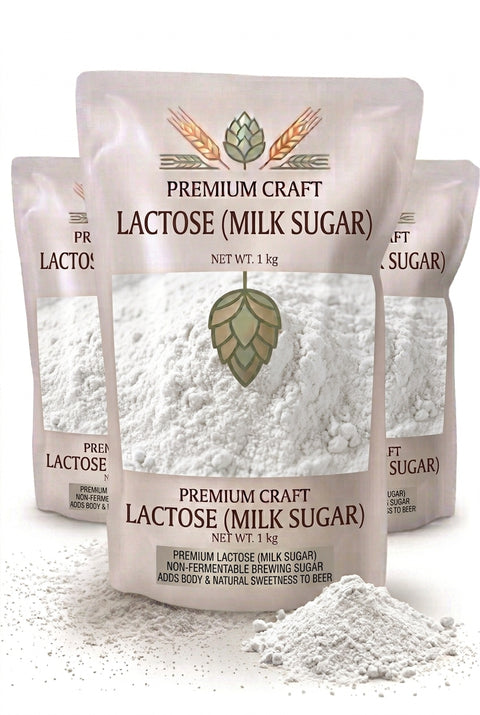
Lactoferm lactose 1 kg - onvergistbare melksuiker voor milk stout, milkshake IPA en pastry beers
The sugar yeast cannot touch. Brewer's yeast has no enzyme for lactose, so every gram you add stays in the beer as sweetness and body: no extra alcohol, no loss over time, just a rounder, creamier, sweeter beer. It is what puts the milk in a milk stout and the shake in a milkshake IPA, and it is the backbone of pastry stouts and dessert sours. Typical doses are 250–500 g per 20 L for a milk stout and 300–600 g for a milkshake IPA.
Lactose is about a fifth as sweet as table sugar, so it adds body more than sugariness — which is why it works. Add it to the boil for the last 10 minutes so it dissolves and is sanitised. It also lets you back-sweeten a cider or a sour without the bottles exploding.
Contains milk sugar — not for lactose-intolerant or dairy-free drinkers; label your beer. Do not use it as priming sugar: it will not carbonate anything. Store dry; it clumps in humid air.
Key features
- Food-grade lactose (milk sugar), 1 kg
- Unfermentable by brewer's yeast — permanent sweetness and body
- Milk stout, milkshake IPA, pastry stout, dessert sours
- Back-sweetens cider and sours without refermentation
- Typical dose 250–600 g per 20 L
Usage
- Add to the boil with 10 minutes left, stir until dissolved
- Milk stout: 250–500 g per 20 L; milkshake IPA: 300–600 g
- Back-sweetening: dissolve in hot water and add at bottling or kegging
- Store sealed and dry
Quick facts
- Contents: lactose, food grade
- Sweetness: ≈ 20% of sucrose
- Pack: 1 kg
Related products
- Flaked Oats — the silky body partner
- Weyermann Carafa Special III — the roast for a milk stout
- SafAle S-04 — the English yeast for sweet stouts
- Vinoferm Glucose — the sugar that does ferment
From the blog
- Dry Hopping Guide — building a milkshake IPA