
Milwaukee TH300 Digital Thermometer -50 to +150 °C - Stainless Probe on 1 m Cable for Kettle, Mash Tun & Brew Day
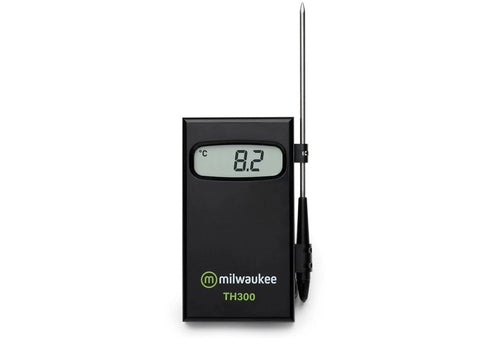
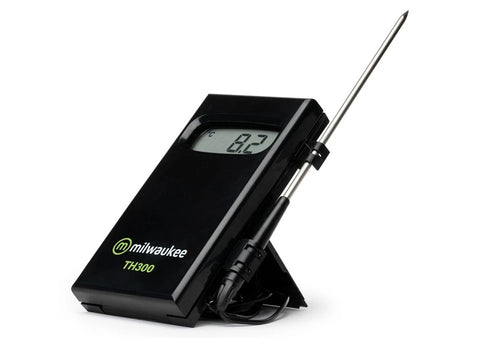
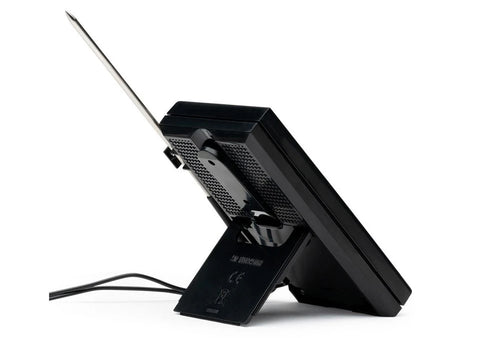
The thermometer you leave in. A 10 cm stainless probe on a flexible 1 m cable, a large-digit display that clips in a breast pocket or sits on the bench, and a reading from -50 to +150 °C in 0.1 °C steps: hang the probe into the mash tun, the sparge water or the chilling wort and watch the number from where you are standing, instead of walking over with a pen thermometer every five minutes. Milwaukee makes lab and process instruments; this is their pocket model and it reads like it, ±0.5 °C.
Taped to the outside of a fermenter under a bit of insulation it doubles as a fermentation thermometer, and on a counterflow chiller it tells you the moment the wort hits pitching temperature. One battery runs it for about a year. Two-year warranty on the meter, six months on the probe.
The probe goes in the liquid, the meter does not — it is not waterproof. Cable and probe handle boiling wort; keep the cable off the burner.
Key features
- Range -50 to +150 °C, 0.1 °C resolution, ±0.5 °C
- Stainless probe, 10 cm, on a 1 m flexible cable
- Large LCD — readable across the brew space
- Battery included, ~1 year of use
- Milwaukee Instruments: 2-year warranty, 6 months on the probe
Usage
- Clip the meter to a pocket or the kettle rim, lower the probe into the liquid
- For a mash, push the probe into the grain bed away from the wall
- Tape the probe to a fermenter wall under foam or cloth for a fermentation reading
- Rinse the probe after use; keep the meter dry
Quick facts
- Range: -50 to +150 °C
- Accuracy: ±0.5 °C, 0.1 °C resolution
- Probe: stainless, 100 mm, 1 m cable
- Brand: Milwaukee Instruments TH300
Related products
- Waterproof Digital Thermometer — the handheld one
- Digital Instant-Read Thermometer — the pocket one
- Inkbird ITC-308 — when you want the temperature controlled, not just read
- Milwaukee Electrode Rinse — the other Milwaukee on the bench
From the blog
- Your First All-Grain Brew Day — where a leave-in thermometer saves the mash